Queue Management System in Saudi Arabia: A 2026 Buyer’s Guide for Clinics and Government Offices
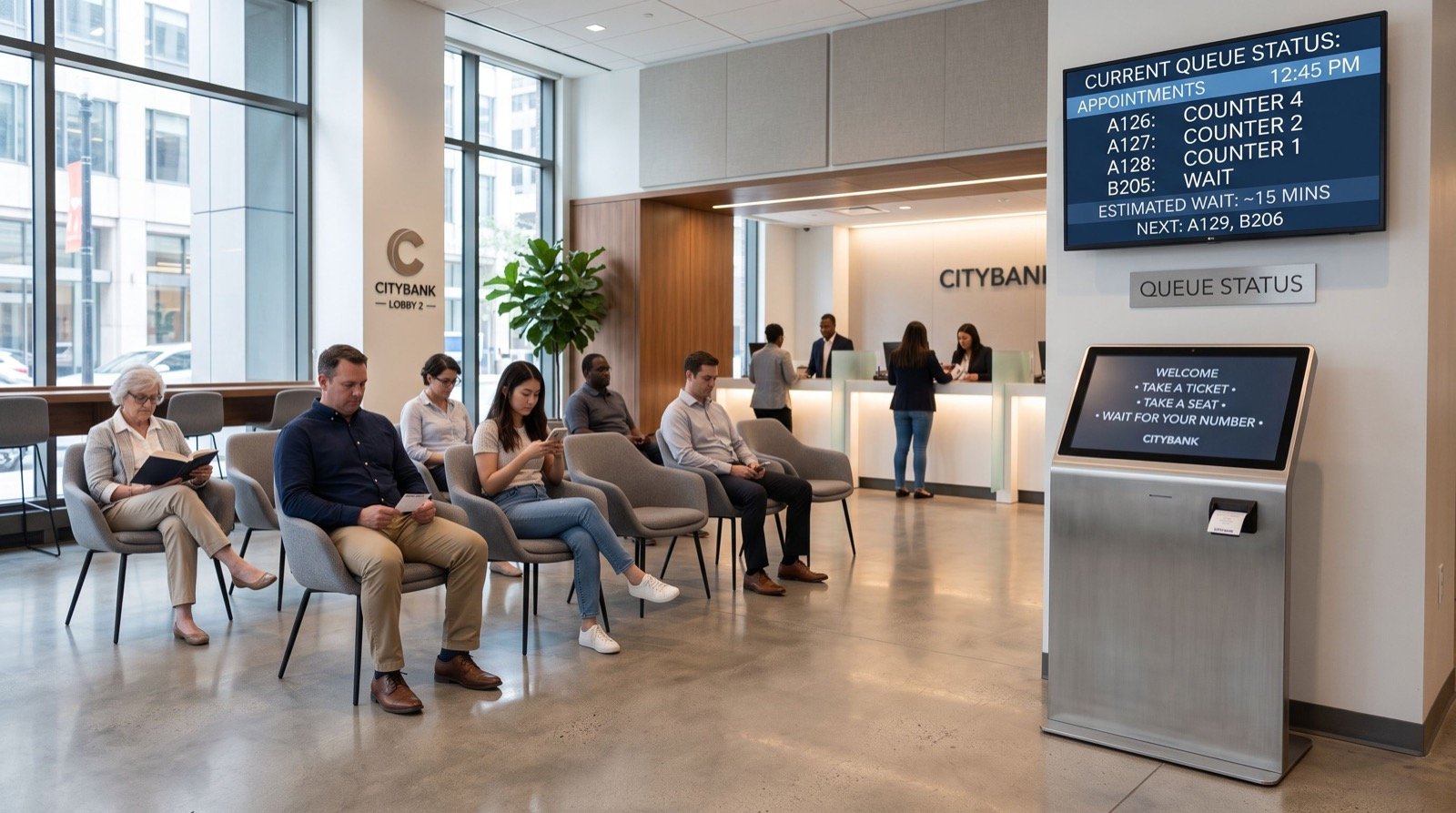
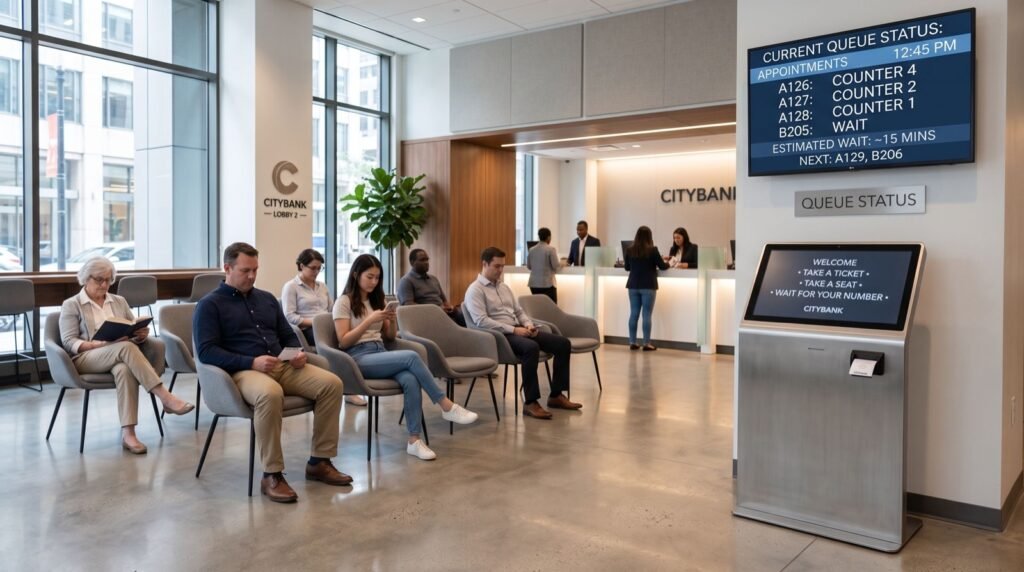
Walk into almost any busy government service center or outpatient clinic in Riyadh, Jeddah, or Dammam today and you will notice something different from five years ago: there is no scrum of people crowding the front desk. Instead, a ticket number, a digital display, and a calm waiting area. That shift is powered by a queue management system in Saudi Arabia, and in 2026 it has become one of the most requested upgrades for public-facing organizations across the Kingdom.
This guide breaks down what a modern queue management system actually does, why Saudi healthcare and government facilities are adopting it so quickly, how to evaluate vendors, and what pitfalls to avoid during a rollout. Whether you run a polyclinic in Al Khobar or a municipal services counter, the fundamentals below will help you make a confident decision.
What Is a Queue Management System and Why Does It Matter Now?
A queue management system (QMS) is a combination of hardware and software that organizes visitor flow: ticket kiosks, counter displays, audio call-outs, and a backend dashboard that tracks wait times, service duration, and staff performance. Rather than a first-come-first-served crowd at a door, visitors take a number, sit down, and are called automatically when their turn arrives.
In Saudi Arabia, the push toward Vision 2030’s digital transformation goals has made efficient citizen and patient experience a measurable KPI for ministries, municipalities, and private healthcare groups alike. Facilities that still rely on manual sign-in sheets are increasingly the exception, not the rule, especially in cities with high population density and multilingual visitor bases.
The Core Problem It Solves
Overcrowded waiting rooms create three measurable costs: lost staff productivity from constant interruptions, poor patient or citizen satisfaction scores, and compliance risk when social distancing or capacity limits apply. A well-configured QMS addresses all three by converting an unpredictable crowd into a structured, data-backed pipeline.
How Saudi Clinics and Service Centers Are Using Queue Systems in 2026
The use cases have matured well beyond simple “take a ticket” kiosks. Here is what a typical 2026 deployment includes:
- Self-service kiosks with Arabic and English touchscreens for ticket issuance
- SMS or app-based virtual queuing so patients can wait off-site and get notified when their turn is near
- Priority routing for elderly visitors, pregnant women, and people with disabilities, which is a legal consideration under Saudi accessibility guidelines
- Integrated analytics dashboards that feed into facility management reporting
- Multi-branch synchronization so a hospital group can monitor wait times across all locations from one console
For organizations that also need financial compliance tooling alongside operational upgrades, it is worth noting that Saudi clinics running their own billing are increasingly required to align with ZATCA e-invoicing phases; our related piece on e-invoicing compliance, built with input from dependable specialists in the field, is a useful companion read when you are modernizing multiple back-office systems at once.
Is a Queue Management System Worth It for a Mid-Size Clinic?
This is the question most facility managers ask before signing a contract. The honest answer: for any location handling more than roughly 80-100 visitors per day, yes. The return comes from three places.
| Benefit | Manual Process | Digital Queue System |
|---|---|---|
| Average wait time visibility | None, guesswork only | Real-time, logged per counter |
| Staff interruptions per hour | High (constant “am I next” questions) | Near zero |
| Patient/citizen satisfaction | Inconsistent | Measurable and improvable |
| Reporting for management | Manual, error-prone | Automated dashboards |
| Multi-branch comparison | Not possible | Centralized, instant |
Beyond the numbers, there is a softer but real benefit: staff morale improves when they are not fielding the same frustrated question every few minutes. A calmer front line tends to deliver better service quality overall.
Choosing the Right Vendor for Installation and Support
Hardware quality and local support responsiveness matter more than flashy software features. Before signing with any provider, confirm the following:
- Do they stock replacement thermal printers and display units locally, or do parts ship from abroad with weeks of delay?
- Can the system operate fully in Arabic, including right-to-left ticket printing and voice announcements?
- Is there a maintenance SLA with a guaranteed response window, ideally under 24 hours for critical failures?
- Does the vendor offer a queue management system in saudi arabia solution that has already been deployed in comparable facility types, such as hospitals, government offices, or banks?
- Can the analytics dashboard export reports in formats your compliance team already uses?
A provider with regional experience will also understand Saudi-specific scheduling patterns, such as prayer-time service pauses and the Friday-Saturday weekend, which many generic international platforms do not account for out of the box.
What About Drive-Through and Retail Service Points?
Queue logic is not limited to indoor counters anymore. Pharmacies, fast-casual restaurants, and even vaccination drive-through points across the Gulf region have adapted similar technology for vehicle lanes. In fact, operators expanding across borders often look at how a Drive Thru System in pakistan handles order-to-window timing, since the underlying hardware principles (order confirmation displays, timer tracking, lane cameras) translate directly to Saudi drive-through healthcare and retail deployments.
Common Rollout Mistakes to Avoid
Even with the right vendor, implementations can stumble. The most frequent issues we see in the field include:
- Skipping staff training, which leads to kiosks being bypassed entirely within the first week
- Underestimating peak-hour ticket volume during Ramadan or back-to-school health checkup seasons
- Placing kiosks in poor lighting or low-traffic corners where visitors do not notice them
- Failing to connect the system to a backup power source, which matters during the Kingdom’s occasional grid fluctuations in summer months
Frequently Asked Questions
How much does a queue management system cost in Saudi Arabia?
Pricing varies widely based on kiosk count, counter displays, and software licensing tier, but a single-branch clinic deployment typically ranges from a few thousand to the low tens of thousands of Saudi riyals depending on hardware specification and whether virtual queuing (SMS/app) is included.
Can a queue management system integrate with existing hospital software?
Most modern platforms offer API integration with electronic medical record (EMR) and appointment scheduling systems, so patients checked in online can be automatically assigned a queue position without duplicate data entry.
Do queue systems work during internet outages?
Reputable hardware includes local buffering, meaning ticket issuance and counter calls continue functioning even if the internet connection drops temporarily, with data syncing once connectivity is restored.
Is Arabic language support standard or an add-on?
For any serious deployment in the Kingdom, full Arabic support, including RTL text rendering and voice prompts, should be a baseline requirement, not a paid add-on. Always confirm this during the demo stage.
Final Thoughts
A queue management system is no longer a luxury reserved for flagship hospitals in Saudi Arabia; it is quickly becoming a baseline expectation for any patient-facing or citizen-facing organization that wants to compete on service quality in 2026. The technology has matured, costs have come down, and local support networks have expanded, making this one of the more straightforward operational upgrades available today. If you are evaluating vendors, prioritize local support responsiveness and Arabic-first design over marketing claims, and your facility’s wait times and satisfaction scores will reflect the investment within the first quarter of operation.