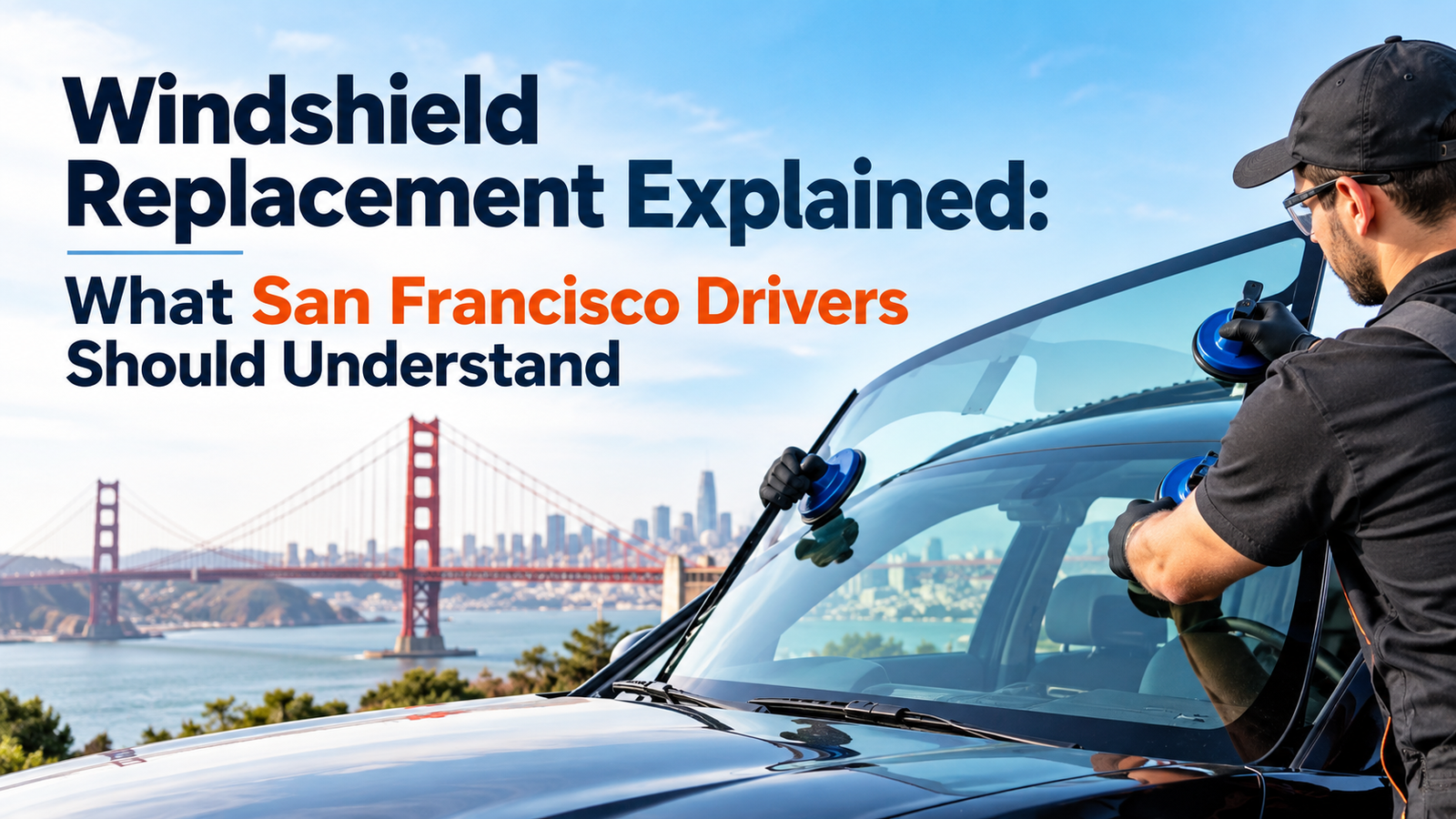
Replacing a windshield sounds like a simple swap, and from the driver’s seat it can look that way. One piece of glass comes out and another goes in. Underneath that simplicity is a surprising amount of engineering. The Windshield Replacement San Francisco is a structural component, a safety device, a sensor platform, and a weather barrier all at once, and the way it is removed and installed affects how well each of those roles is performed.
This guide explains what a replacement actually involves, when it becomes necessary, how the glass itself is made, what the different types of glass mean, and what happens during and after installation. It also looks at conditions that matter in a city like San Francisco, where fog, hills, street parking, and coastal air create their own demands on automotive glass. The goal is to give readers a solid general understanding, so the terms and steps make sense when they come up.
What a Windshield Is Made Of
A windshield is laminated glass. Two thin sheets of glass are permanently bonded with a layer of clear plastic between them, typically polyvinyl butyral. The assembly is heated and pressed so the layers fuse into a single piece. When something strikes the glass hard enough to break it, the plastic holds the fragments in place, which is why a shattered windshield tends to crack in a spiderweb pattern rather than falling apart into pieces.
That construction makes the windshield stronger than a single sheet of equal thickness. It also reduces noise, blocks much of the sun’s ultraviolet radiation, and keeps occupants inside the vehicle during a collision. Side and rear windows are usually tempered glass, which is a single sheet that crumbles into small granules when broken. The two types behave very differently, and that difference is the reason windshields can sometimes be repaired while tempered windows cannot.
The Structural Role of the Windshield
Many people think of the windshield as a window, but engineers treat it as part of the vehicle’s structure. In a frontal crash, the passenger-side airbag inflates against the windshield, which gives it a surface to push against and helps direct it toward the occupant. In a rollover, the glass contributes significantly to roof strength, helping to prevent the roof from collapsing.
The windshield can only do these jobs if it is firmly bonded to the vehicle’s frame. This is why adhesive, preparation, and cure time are central to a proper replacement, and why a windshield that is loose, leaking, or poorly bonded is a real safety concern.
When Replacement Becomes Necessary
Not every damaged windshield needs to be replaced. Small chips and short cracks can often be repaired. Replacement becomes the sensible option in a number of situations.
- Long cracks. Cracks that extend beyond a few inches are generally treated as replacement cases because they continue to spread and cannot be reliably restored.
- Cracks that reach the edge. An edge crack compromises the structural bond and tends to run.
- Damage in the driver’s line of sight. Even a well-done repair can leave slight distortion, so damage directly in front of the driver is treated more cautiously.
- Deep or multiple impacts. Damage that penetrates both layers of glass, or many scattered chips, is difficult to repair.
- Contaminated damage. Chips filled with dirt, moisture, or old repair material may not accept new resin.
- Delamination or discoloration. When the plastic layer separates from the glass, the windshield may appear cloudy or show bubbles near the edge.
- Pitting and haze. Years of sand and road grit can sandblast the surface, creating glare that is hard to see through at night.
- Leaks or failed seals. If the bond itself is compromised, replacement may be the way to restore the seal.
California law generally prohibits driving with a windshield damaged in a way that obstructs the driver’s view, which is another reason substantial cracks tend to lead to replacement.
Types of Replacement Glass
The glass that goes into a vehicle can come from different sources, and the terminology is worth understanding.
OEM glass is made by or for the vehicle manufacturer to the original specifications, often carrying the automaker’s logo.
OEE glass, short for original equipment equivalent, is made by a different manufacturer to the same specifications but without the automaker’s branding.
Aftermarket glass is produced by independent manufacturers to meet federal safety standards, though dimensions, tint, and optical quality can vary more.
All windshields sold in the United States must comply with federal motor vehicle safety standards, and they carry markings in the corner of the glass identifying the manufacturer and the standards met. The practical differences tend to show up in fit, optical clarity, the shape of the camera bracket, and compatibility with features like rain sensors and heads-up displays. For vehicles with driver assistance cameras, the glass must be optically suitable for the camera to see through accurately, which is a reason some manufacturers recommend specific glass.
Features Built Into Modern Windshields
A windshield today may contain far more than glass. Depending on the vehicle, it may include:
- A shaded band across the top to reduce glare
- Acoustic laminate that dampens road and wind noise
- Infrared-reflective or solar coatings that reduce heat
- Embedded heating elements or wiper de-icers
- A bracket or mount for a camera, rain sensor, or light sensor
- A heads-up display layer that projects information onto the glass
- An antenna or electrical connectors
- A defogging grid near the mirror
These features matter during replacement because the new glass must match them. A windshield without the correct bracket, coating, or display layer can cause errors or leave functions inoperative.
How a Replacement Is Done
While specifics differ by vehicle, a careful replacement follows a general sequence.
- Inspection and preparation. The technician examines the glass and surrounding area, identifies features, and protects the interior and paint with covers.
- Removal of trim and wipers. Cowl panels, moldings, and wiper arms are taken off to access the glass edges.
- Cutting the old bond. The adhesive that holds the glass is cut with a specialized tool, and the glass is lifted away using suction handles.
- Preparing the frame. Old adhesive is trimmed to a thin, even layer, rust is addressed, and bare metal is primed. This is one of the most important steps because the new bond depends on a clean, sound surface.
- Preparing the new glass. The edge is cleaned and primed, and any brackets or sensors are transferred or confirmed.
- Applying adhesive. A continuous bead of urethane is laid around the frame in the correct shape and height.
- Setting the glass. The new windshield is lowered into position and aligned within millimeters.
- Reassembly and cleanup. Trim, wipers, and panels are reinstalled, and the glass is cleaned.
- Curing and inspection. The vehicle is left until the adhesive reaches safe strength, and the installation is inspected for leaks and fit.
- Calibration, if needed. Driver assistance cameras are recalibrated.
The quality of each step determines how long the installation lasts and how well it performs in an accident.
Adhesive and Cure Time
The adhesive used is typically a high-strength, moisture-curing urethane. It hardens by reacting with humidity in the air, and its strength builds over time. The period before the vehicle is safe to drive is called the safe drive-away time. It depends on the adhesive formula, temperature, and humidity, and it commonly ranges from under an hour to several hours.
San Francisco’s cool, humid air is generally favorable for moisture-curing adhesives, though very cold or very damp conditions can change the timing. The installer chooses the product accordingly. Full cure, when the bond reaches its final strength, takes longer, often a day or more.
Driver Assistance Systems and Calibration
Many vehicles built in the last several years have cameras or sensors mounted at the windshield. They support features like lane keeping, automatic braking, adaptive cruise control, and sign recognition. When the windshield is replaced, the camera’s view and angle can shift slightly, and it needs to be recalibrated to see the road correctly.
Calibration may be static, performed with targets while the vehicle is stationary, or dynamic, performed on the road, or both. Skipping it can cause the system to misjudge distances or lane positions, and it is one of the most important steps on modern vehicles. A warning light may or may not appear if calibration is needed, so the vehicle owner should not rely on the dashboard alone.
San Francisco Conditions That Affect Windshields
A few local factors shape how windshields live and age in the city.
Fog and moisture. Summer fog and year-round dampness keep surfaces wet and can leave moisture at the edges of the glass and in the cowl area. A well-installed seal is especially important to keep that moisture out.
Hills and vibration. Steep streets and rough pavement subject vehicles to frequent flexing and jolting, which can stress a chip or an aging bond.
Street parking. Many residents park outdoors, exposing the glass to sun, falling debris, tree sap, and bird droppings. Tight parallel parking and heavy traffic also mean more risk of minor impacts.
Coastal air. Salt in the air accelerates corrosion on metal frames, which can undermine the adhesive bond if rust develops at the pinch weld.
Temperature range. San Francisco is mild, but sunny stretches and cool evenings still create thermal cycling, and defroster use on cold, foggy mornings can stress already damaged glass.
Vehicle break-ins. Broken side and rear glass is a recurring issue in dense urban areas, and while it involves different glass, it contributes to the general picture of automotive glass needs in the city.
Aftercare in the First Days
A fresh installation is strongest when it is left alone for a short time. Typical guidance includes:
- Keep retention tape on the glass for about a day or as instructed.
- Do not slam doors for the first day or two, and crack a window slightly to relieve pressure.
- Avoid automatic car washes and high-pressure water for about two or three days.
- Do not remove stickers or trim near the edge until advised.
- Avoid driving over very rough roads right after installation when possible.
- Watch for leaks, whistling, or loose trim over the next several days.
These precautions give the adhesive time to reach full strength.
Signs of a Poor Installation
A good installation should be quiet, watertight, and secure. Warning signs include wind whistling at speed, water stains inside, trim that sits unevenly, a gap or lump in the adhesive visible at the edge, rattling, or fogging between the layers. Any of these deserve attention soon after installation, since a weak bond affects safety.
Environmental Aspects
Old windshields are difficult to recycle because of the plastic layer, though some facilities separate the glass and plastic and reuse them in products such as insulation, fiberglass, or road materials. Environmental practices vary, and the amount of windshield glass that is recycled has been growing but is not universal.
Frequently Asked Questions
How do I know if my windshield needs replacing instead of repair?
Long cracks, edge cracks, deep damage, and chips in the driver’s primary view are the common reasons to replace. Small, clean chips and short cracks may be repairable. A professional assessment gives the clearest answer for a specific case.
How long does a windshield replacement take?
The installation itself is typically completed in a few hours, but the safe drive-away time adds waiting. If driver assistance calibration is needed, that adds further time.
What is the difference between OEM and aftermarket glass?
OEM glass is made to the vehicle manufacturer’s specifications and usually carries its branding. Aftermarket glass is made by independent manufacturers to meet federal standards, though fit and optical details can vary.
Does a new windshield need to be calibrated?
If the vehicle has a forward-facing camera or similar driver assistance sensor attached to the windshield, calibration is generally needed after replacement so the system works correctly.
Can a windshield be replaced in damp or foggy weather?
Light dampness can be managed, but heavy moisture interferes with adhesive bonding and is typically avoided. Technicians check surface conditions before proceeding.
How long should I wait before driving after a replacement?
Follow the safe drive-away time given by the installer. It depends on the adhesive and conditions, and driving too early can compromise the bond.
Why does my new windshield have a small dot pattern around the edge?
The black dots and band, called frit, are ceramic paint baked onto the glass. They protect the adhesive from sunlight and help create a smooth transition from the dark border to the clear glass.
Is it normal to see slight distortion in a new windshield?
A small amount of optical variation near the edges can be normal, but noticeable warping in the main viewing area is not. Quality glass should look clear and undistorted where the driver looks.
Final Thoughts
A windshield replacement is a meaningful structural and safety procedure that involves glass construction, chemistry, precise fitting, and electronics. The outcome depends on the quality of the glass, the cleanliness of the bonding surfaces, the correct adhesive and cure time, and proper calibration of any camera systems.
For drivers learning about windshield replacement in San Francisco, local conditions such as fog, hills, coastal air, and street parking add context to the basics. Knowing what a replacement involves, which signs point to a good installation, and what aftercare supports it makes the whole process easier to understand and the result easier to trust.